Quotes - RISE 2019 Conference
Transforming University Engagement In Pre- and Post-Disaster Environments: Lessons from Puerto Rico


Transforming University Engagement In Pre- and Post-Disaster Environments: Lessons from Puerto Rico
“SUNY is proud to have played a pivotal role in Puerto Rico’s ongoing recovery efforts
after the devastation caused by Hurricanes Irma and Maria. As we continue to confront the atmospheric effects of climate change, it is absolutely critical that we shore up our wisdom and collective
resources to find ways to effectively manage these natural disasters. We look forward to sharing the lessons learned from our experiences in Puerto Rico with a national audience.”
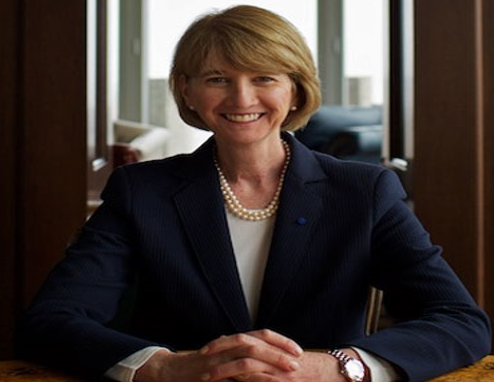
Kristina Johnson, Ph.D.
Chancellor, State University of New York
Honorary Co-Chair, RISE 2019
“The University of Puerto Rico is very pleased to be partnering with UAlbany, SUNY, CUNY and the National Council for Science and the Environment (NCSE) in hosting the RISE 2019 national conference with its focus on higher education and resilience. While numerous lessons were learned from the devastation afflicted by Hurricanes Irma and Maria on Puerto Rico, much work needs to be done to build more sustainable and resilient communities. To this end, our universities and colleges are extraordinarily well positioned to leverage our research and discovery, teaching and workforce development, and community and public engagement missions to make a lasting impact in the fight against climate change – one that will go far to protect and safeguard Puerto Rico, as well as our global society in the years to come.”
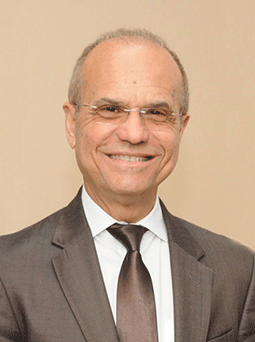
Jorge Haddock Acevedo, Ph.D.
President, University of Puerto Rico
Honorary Co-Chair, RISE 2019
“I am particularly proud of the work CUNY has done with Gov. Cuomo to help the people of Puerto
Rico rebuild. When it comes to responding to the devastation of Hurricane Maria and other natural disasters,
it is essential for anchor institutions such as CUNY to be ready to collaborate with stakeholders, build partnerships and marshal resources.
We are honored to participate in RISE 2019, and look forward to exploring the ways in which universities can come together to help communities
strengthen their resiliency and manage their responses to climate-related disasters. The mission to help others takes many forms and we believe
this is part of our mission.”
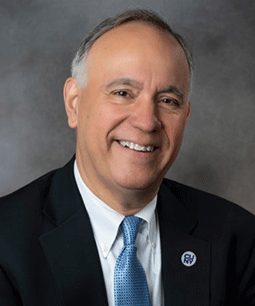
Félix Matos Rodríguez, Ph.D.
Chancellor, City University of New York
Honorary Co-Chair, RISE 2019
“Increasingly frequent extreme weather associated with global climate change is arguably the most serious challenge facing society today.
As leaders in higher education, we must think more holistically about our role in the future of disaster preparation, response and recovery.
As the host of RISE 2019, UAlbany is proud to set the scenario for a national conversation that looks to transform university-community engagement
in pre- and post-disaster environments, and strengthen resiliency.”

Havidán Rodríguez, Ph.D.
President, University at Albany
“In the aftermath of the hurricane disaster in Puerto Rico, it became obvious that there was a
need for the coordination of efforts among the institutions of higher education that were converging
on the ground. We realized that universities were acting as first responders without being organized for
that role. For that reason, INESI collaborated with Arizona State University and the University of Minnesota
in hosting a three day workshop in Puerto Rico during the summer after Hurricane Maria. Almost one hundred researchers,
community leaders and emergency managers came together to reflect on their experiences and agreed that this conversation
was essential for our survival in the climate change era.”
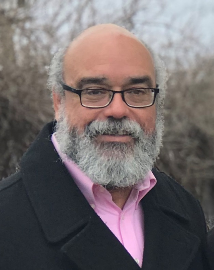
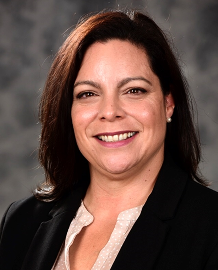
Cecilio Ortiz Garcia, Ph.D. and Marla Lugo Perez, Ph.D.
Program Co-Chairs of RISE 2019
Senior Fellows of the National Council for Science and the Environment
Professors of University of Puerto Rico - Mayagüez
Co-Founders of the National Institute of Energy and Island Sustainability (INESI)
“RISE 2019 has two main purposes. The first one is bringing together leaders from across the country spanning higher education, government, community groups, and private and non-profit organizations and others to redefine the role that universities and colleges should play in strengthening community resiliency, planning, preparedness, response and recovery efforts around extreme weather and climate-related disasters. The second is creating a national interdisciplinary and multisectorial convergence platform that can promote and sustain the dialogue, research and insertion of transdisciplinary knowledge in policy processes.”

Michelle Wyman
Executive Director
National Council for Science and the Environment (NCSE)
“There are many institutions of higher education out there that have produced enormous amounts of
scientific knowledge relevant to the issue of community resilience and disaster recovery. It is time that
we develop the relationships necessary to ensure that knowledge is shared across jurisdictions and at multiple
levels.”

Jacob Mans, Ph.D.
Professor, School of Architecture, University of Minnesota
One of the originators of the RISE concept